
Key Takeaways
- Multi-tenant architecture allows a single CLAPi© deployment to serve multiple entities — markets, brands, distribution partners, or product lines — with full data isolation and independent configurations.
- The alternative — separate platform deployments per entity — multiplies infrastructure cost, maintenance overhead, and compliance complexity with every new market or partner added.
- CLAPi© operates across Singapore, Hong Kong, and India from a single platform architecture, supporting all lines of business simultaneously.
- Kubernetes orchestration and Docker containerisation provide the technical foundation for multi-tenant isolation, scalability, and independent per-tenant configuration.
- For APAC insurers planning regional expansion, multi-tenant architecture is the difference between a scalable operating model and a proliferating collection of separate system instances.
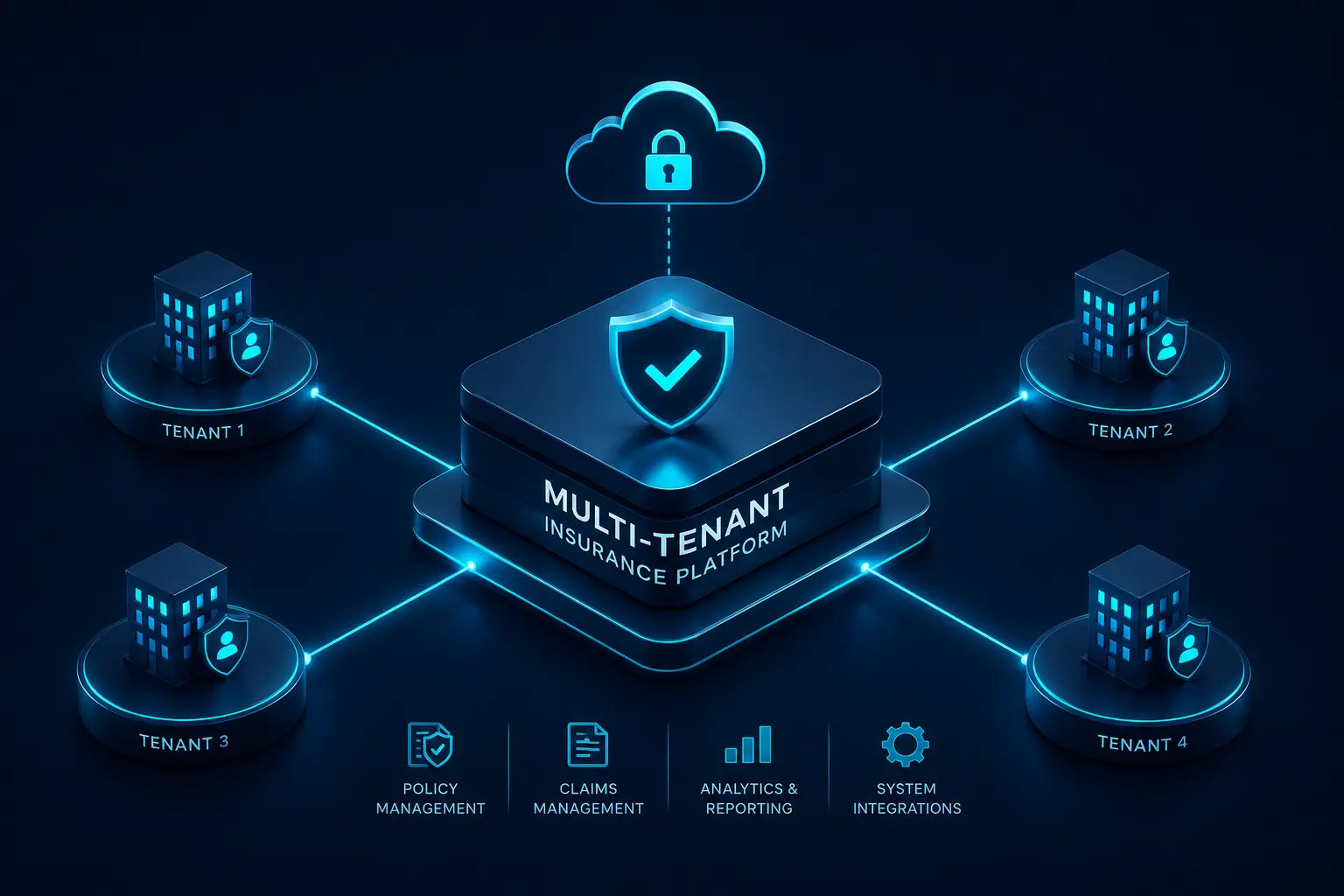
Multi-tenant architecture is one of those technology concepts that insurance CTOs understand at the principle level but rarely examine in detail when evaluating platforms. The result is that many insurers select platforms that claim multi-tenant capability but deliver something considerably more limited — only discovering the gap when they try to expand into a second market or onboard their fifth distribution partner.
This article explains what genuine multi-tenant architecture means in an insurance platform context, how it differs from single-tenant deployments and from shared-database pseudo-tenancy, and why the architecture choice matters specifically for insurers operating or expanding across Asia Pacific markets.
What Multi-Tenancy Actually Means in Insurance Platform Architecture
Multi-tenancy is an architectural design in which a single software deployment serves multiple separate customers (tenants) simultaneously, with each tenant’s data, configuration, and workflows fully isolated from every other tenant.
In an insurance platform context, a tenant can be defined at different levels of granularity:
- At the market level: An insurer operating in Singapore, Hong Kong, and India runs each jurisdiction as a separate tenant — with jurisdiction-specific regulatory rules, product configurations, currency settings, and reporting formats — on the same platform deployment.
- At the brand level: An insurer with multiple subsidiary brands or white-label distribution partners (banks, fintechs, affinity programmes) runs each brand as a separate tenant, with brand-specific customer experiences, document templates, and portal configurations.
- At the product line level: An insurer’s Group Health, Group Life, Micro Insurance, and Travel Insurance books can each be managed as separate tenants, allowing product-line-specific configurations, reporting, and underwriting rules within the same platform.
| Single-tenant (separate deployments) | Multi-tenant (CLAPi© architecture) |
|---|---|
| Separate infrastructure per market / brand | Single infrastructure serves all markets and brands |
| Separate maintenance and update cycle per instance | Updates applied once, benefit all tenants simultaneously |
| Regulatory changes require update to each instance | Regulatory rules configured per tenant in shared platform |
| Data analytics requires cross-instance aggregation | Portfolio analytics available across all tenants natively |
| Infrastructure cost multiplies with each new tenant | Infrastructure cost scales sub-linearly with tenant growth |
| IT overhead grows linearly with market expansion | Single IT team manages all markets on one platform |
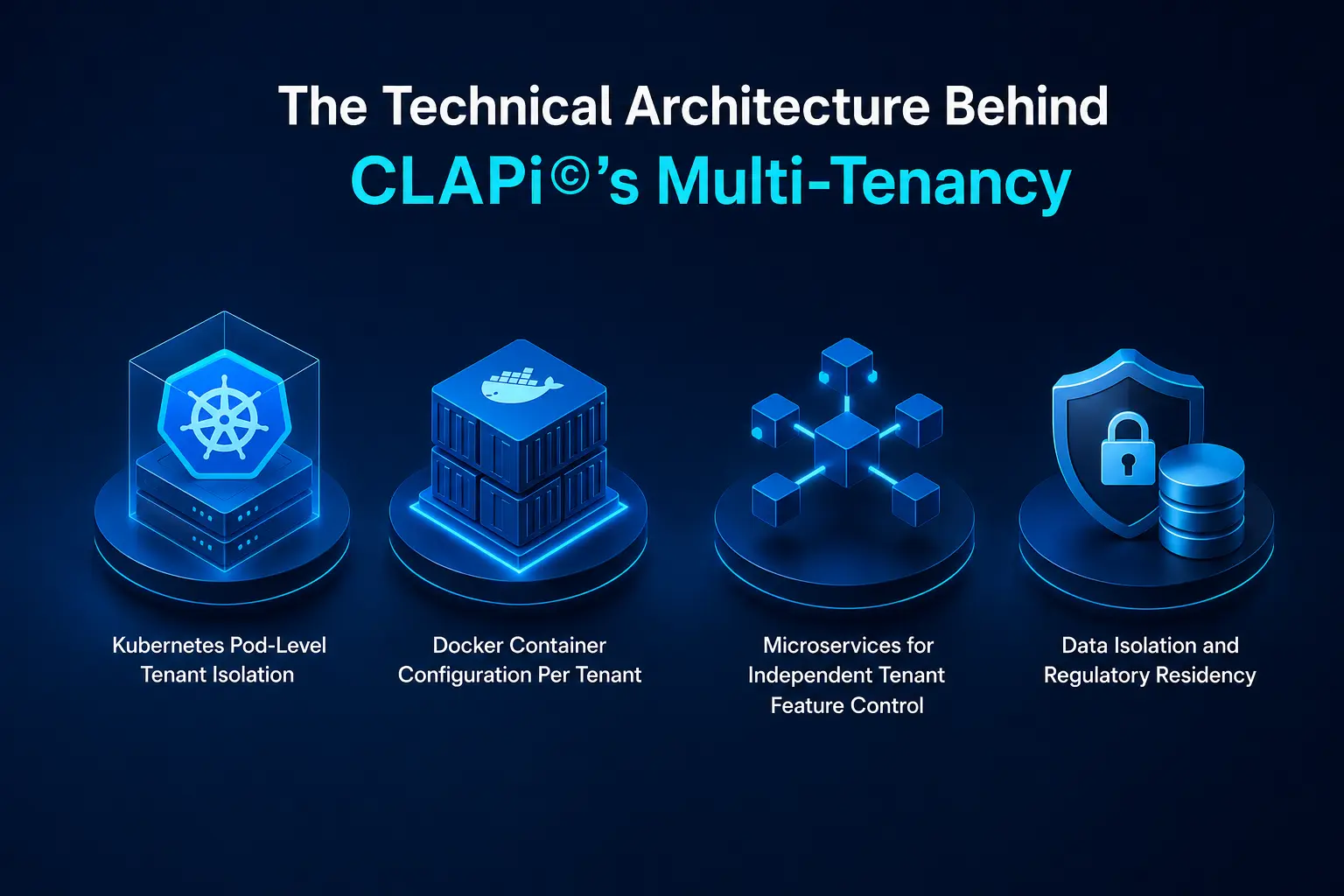
The Technical Architecture Behind CLAPi©’s Multi-Tenancy
CLAPi©’s multi-tenant capability is implemented through a combination of architectural components that provide genuine isolation, scalability, and per-tenant configurability:
-
Kubernetes Pod-Level Tenant Isolation
CLAPi© runs on Kubernetes, with workloads distributed across Pods on Node A and Node B deployment environments. Tenant isolation at the infrastructure level means that each tenant’s processing workload runs in isolated Kubernetes Pods, preventing one tenant’s high transaction volume from degrading performance for other tenants. Kubernetes’ horizontal pod autoscaling scales individual tenant workloads independently — if a bancassurance partner runs a product campaign that generates a spike in policy issuance volume, only that tenant’s pods scale, not the entire platform.
-
Docker Container Configuration Per Tenant
Each CLAPi© module (Product Workspace, Rule Engine, Policy Administration, Claims Management, Reinsurance, and the rest) runs in Docker containers. Per-tenant configuration — product rules, regulatory requirements, branding, document templates, commission structures — is applied at the container configuration level, not through separate code deployments. Adding a new tenant (a new market, a new distribution partner, a new brand) is a configuration exercise, not a deployment project.
-
Microservices for Independent Tenant Feature Control
CLAPi©’s microservices architecture means that individual platform functions can be enabled, configured, or constrained independently per tenant. A bancassurance tenant accessing CLAPi© AffinitiQ might have access to real-time policy issuance APIs and white-label portal configuration, but not to reinsurance bordereaux generation — which is relevant only to the insurer’s internal operation. Feature-level per-tenant control is a direct consequence of microservices design.
-
Data Isolation and Regulatory Residency
In a genuine multi-tenant platform, each tenant’s data is architecturally isolated — not just access-controlled within a shared database. CLAPi©’s data architecture provides this isolation, which is relevant not only for security but for regulatory compliance. APAC regulators increasingly impose data residency requirements — MAS in Singapore, IRDAI in India, IA in Hong Kong — that require policyholder data to remain within specific jurisdictions. Per-tenant data isolation in CLAPi© allows data residency to be configured per tenant without cross-tenant data contamination.
CLAPi© in Practice: Multiple LOBs, Global Markets, One Platform
EnoviQ operates CLAPi© across global markets — with the platform simultaneously supporting multiple lines of business including Health, P&C & Life Insurance This is multi-tenancy in practice. Each market has jurisdiction-specific regulatory configurations tailored to local regulatory requirements. Each line of business has product-specific rules, underwriting criteria, and claims adjudication logic. Distribution partners — banks for Banca Insurance, digital platforms for Embedded Insurance, affinity organisations for group programmes — each have partner-specific configurations within the same platform deployment.
The practical consequence for EnoviQ's insurer clients is that they can operate multi-product, multi-market insurance businesses on CLAPi© without the IT overhead of managing separate platform instances per product line or jurisdiction.
Global Regulatory Compliance in a Multi-Tenant Context
The regulatory landscape across global insurance markets is one of the primary drivers of multi-tenant architecture demand for insurers operating internationally. Regulatory frameworks vary significantly across jurisdictions — with divergent requirements for product approval, disclosure, sales process documentation, data residency, and supervisory reporting.
For an insurer operating across multiple markets on a single-tenant deployment per jurisdiction, regulatory updates require separate implementation in each instance — multiplying compliance cost and risk. On CLAPi©'s multi-tenant architecture, regulatory configurations are managed at the tenant level within the same platform. When a regulatory update applies to one market's tenant, it is implemented once in that tenant's configuration without affecting any other market's configuration.
The Audit & Investigation add-on module maintains jurisdiction-specific audit trails per tenant — ensuring that regulatory examination requests can be fulfilled from the appropriate tenant's audit record without cross-jurisdiction data exposure.
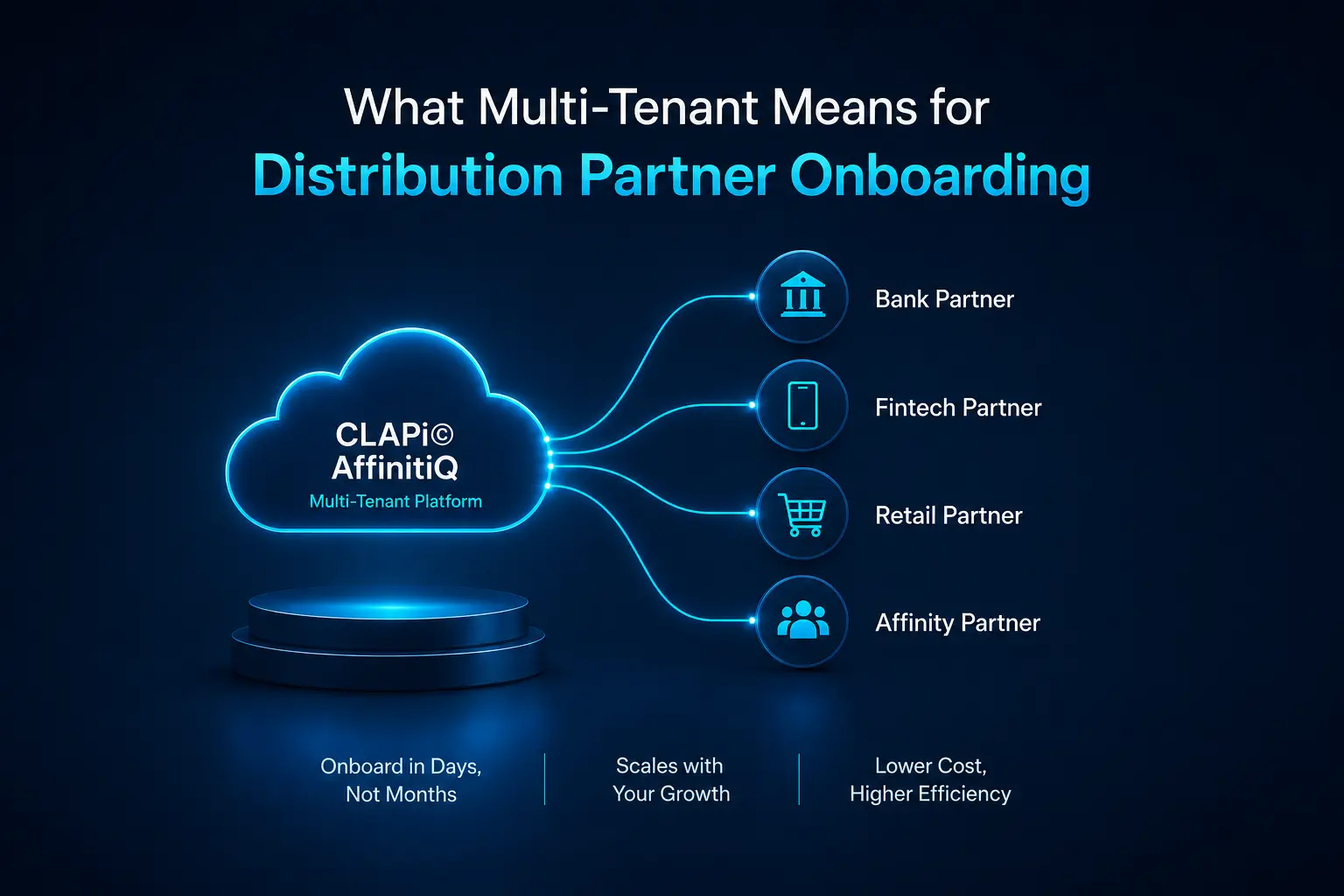
What Multi-Tenant Means for Distribution Partner Onboarding
For insurers using CLAPi© AffinitiQ for bancassurance and affinity distribution, multi-tenancy directly determines the speed and cost of onboarding new distribution partners.
Each distribution partner — a bank, a fintech, a retailer, an affinity organisation — is a separate tenant in CLAPi©'s AffinitiQ deployment. Their product access, commission structures, branding configurations, and regulatory disclosure requirements are configured within their tenant environment. Onboarding a new partner is a tenant configuration exercise, not a development project. The insurer's distribution team can configure and activate a new partner in days rather than months.
As the insurer's partner portfolio grows, the CLAPi© architecture scales sub-linearly. Each new partner adds a tenant configuration, not a platform deployment. The infrastructure, maintenance, and IT overhead of managing a large and growing distribution partner network on a multi-tenant platform remains far more cost-efficient than managing separate platform deployments per partner.
FAQs
Multi-tenant architecture is a design in which a single platform deployment serves multiple separate customers (tenants) simultaneously, with each tenant's data, configuration, and workflows fully isolated. In insurance, tenants can be defined at the market level (different jurisdictions), brand level (subsidiary brands or white-label partners), or product line level (different LOBs). CLAPi© implements multi-tenancy across all three levels.
Instead of maintaining separate platform deployments per market or distribution partner, a multi-tenant platform serves all entities from shared infrastructure. Platform updates, regulatory compliance implementations, and maintenance are applied once and benefit all tenants. Infrastructure scales sub-linearly with tenant growth rather than linearly. For an insurer operating in three APAC markets, the difference is between one IT team managing one platform and three teams managing three separate instances.
CLAPi©'s multi-tenant architecture provides architectural data isolation per tenant — not just access controls within a shared database. Kubernetes Pod-level isolation prevents cross-tenant workload interference. Docker container configuration per tenant ensures processing separation. Data residency requirements for specific APAC jurisdictions are met through per-tenant data configuration without cross-tenant data exposure.
Yes. Regulatory configurations in CLAPi© are managed at the tenant level. Singapore (MAS), Hong Kong (IA and SFC), and India (IRDAI) each have separate regulatory requirement sets configured in their respective tenant environments. Regulatory updates for one jurisdiction are implemented in that tenant's configuration without affecting other jurisdictions. The Audit & Investigation module maintains jurisdiction-specific audit trails per tenant.
CLAPi©'s multi-tenant architecture does not impose a fixed limit on the number of distribution partner tenants. Each partner is a tenant configuration, and Kubernetes orchestration scales the infrastructure to match aggregate workload across all tenants. Insurers with large and growing distribution partner portfolios can continue adding partners without re-platforming or infrastructure restructuring.
Scale Your Insurance Operation Across APAC on One Platform
If you are planning market expansion across Asia Pacific or growing your distribution partner portfolio and want to understand how CLAPi©’s multi-tenant architecture supports this growth, our team can walk you through the platform’s deployment model and per-tenant configuration capability.